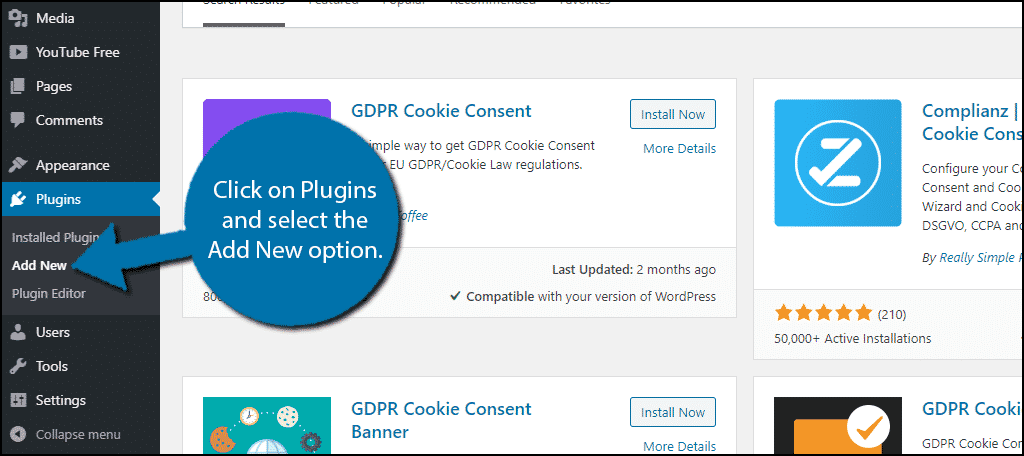
Here are the steps on how to set up and manage WordPress website cookie consent and GDPR compliance:
- Choose a cookie consent plugin. There are many cookie consent plugins available for WordPress, so you can choose one that best suits your needs. Some popular options include Cookie Yes, Cookie Notice & Compliance, and GDPR Cookie Compliance.
- Install and activate the plugin. Once you’ve chosen a plugin, you can install and activate it from the WordPress dashboard.
- Configure the plugin settings. The plugin settings will vary depending on the plugin you choose, but you’ll typically need to specify the types of cookies you use, whether you want to allow users to opt-in or opt-out of cookies, and where you want the cookie consent banner to appear.
- Add the cookie consent banner to your website. Once you’ve configured the plugin settings, you can add the cookie consent banner to your website. The plugin will usually provide you with a code that you can paste into your website’s header or footer.
- Test the cookie consent banner. Once you’ve added the cookie consent banner to your website, test it to make sure it’s working properly. You can do this by visiting your website in a private browsing window or by using a different browser.
Here are some additional tips for setting up and managing WordPress website cookie consent and GDPR compliance:
- Make sure the cookie consent banner is clear and concise.
- Use plain language that users can understand.
- Give users the option to opt-in or opt-out of cookies.
- Keep the cookie consent banner updated as your website changes.
- Test the cookie consent banner regularly to make sure it’s working properly.
By following these steps, you can ensure that your WordPress website is compliant with GDPR and that users are aware of the cookies that are being used on your website.
Here are some additional resources that you may find helpful:
- WordPress Cookie Consent Plugins: https://wordpress.org/plugins/tags/cookie-consent/
- GDPR Cookie Consent: https://www.cookieconsent.com/
- GDPR Compliance: https://gdpr.eu/

[…] How to set up and manage WordPress website cookie consent and GDPR compliance? […]