Introduction
In today’s digital ecosystem, links form the backbone of modern work. Whether you are a freelance writer, marketing lead, software engineer, or content creator, your daily tasks rely on URLs: landing pages, design mockups, research sources, campaign tracking paths, and client dashboards.
As the volume of web resources grows, managing them becomes chaotic. What starts as a quick bookmark list degenerates into messy digital clutter. Critical links get lost in chat threads, campaign tags break, and unmonitored dead URLs erode user trust and search performance.
Digital clutter causes lost revenue, wasted hours, and broken team workflows. Effective link management has evolved from a simple convenience into an essential operational standard.
What is URL Management?
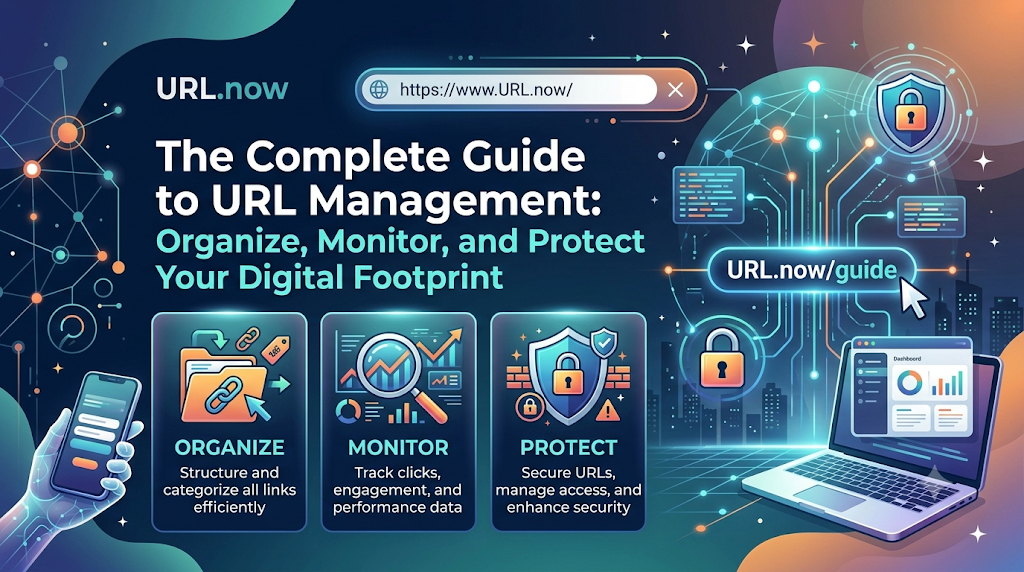
URL management is the process of collecting, categorizing, monitoring, and sharing web links throughout their lifecycle. Rather than treating URLs as static text, structured link management views web addresses as active digital assets.
       +-------------------------------------------------------+
       |               URL Management Lifecycle                |
       +-------------------------------------------------------+
                                   |
        +--------------------------+--------------------------+
        |                                                     |
        v                                                     v
+---------------+                             +---------------+
| Asset Context |                             | Asset Health  |
+---------------+                             +---------------+
| • Categorization                            | • Uptime & Status Check
| • Metadata & Tagging                        | • Expiration Tracking
| • Access Control                            | • Redirect Verification
+---------------+                             +---------------+
Core disciplines include:
- Centralized Storage: Replacing local bookmarks with a searchable, multi-device repository.
- Structural Organization: Grouping links into folders, categories, tags, and collections.
- Health Monitoring: Tracking destinations to ensure they remain active and free of 404 or 500 errors.
- Metadata Context: Adding titles and descriptions so teams understand an asset’s purpose immediately.
- Distribution: Sharing curated link sets through branded portals and “link in bio” hubs.
Why URL Management Matters
A dedicated URL organizer tool delivers key workplace advantages:
- Eliminates Context Switching: Keeps critical links seconds away instead of buried in chat apps.
- Preserves Knowledge: Keeps company resources accessible even when team members depart.
- Protects Brand Reputation: Prevents broken URLs from hurting SEO and customer trust.
- Streamlines Collaboration: Replaces walls of raw links with clean, organized link bundles.
Common Problems with Unmanaged Links
Without a centralized link strategy, digital workflows encounter predictable bottlenecks:
1. The Bookmark Graveyard
Standard browser bookmarks were not built for modern high-density workflows. Unorganized lists spread across multiple browsers and devices become hard-to-search black holes.
2. Silent Link Decay
Websites constantly move, restructure, or delete pages. “Link rot” happens silently, leaving clients and readers on dead 404 pages that hurt conversion rates and search rankings.
3. Expired Campaigns
When seasonal promotions or marketing campaigns end, old links often remain live on social feeds or partner blogs, driving traffic to outdated offers.
4. Fragmented Team Collaboration
Dropping raw URLs across Slack, email, and docs creates confusion and forces team members to re-ask for resource locations constantly.
5. Digital Footprint Blind Spots
As a business scales, tracking every public profile, landing page, and partner mention becomes nearly impossible without a centralized digital footprint management tool.
Why Professionals Need a Dedicated URL Management Tool
Resolving digital clutter requires moving beyond basic spreadsheets and browser extensions to a specialized link management platform.
+-----------------------------------------------------------------------+
|                    Unified URL Management Platform                    |
+-----------------------------------------------------------------------+
                                   |
      +----------------------------+----------------------------+
      |                            |                            |
      v                            v                            v
+------------------+     +--------------------+     +-------------------+
| Knowledge Hub    |     | Automated Safety   |     | Public Portals    |
+------------------+     +--------------------+     +-------------------+
| • Deep Search    |     | • Health Checking  |     | • Link Portfolios |
| • Folder Tree    |     | • Error Alerts     |     | • Link in Bio     |
| • Custom Tags    |     | • Expiration Dates |     | • Client Hubs     |
+------------------+     +--------------------+     +-------------------+
Key capabilities include:
- Centralized Dashboard Control: A single source of truth for all internal and public assets.
- Flexible Structure: Combining folder trees for structural hierarchy with tags for cross-cutting context.
- Advanced Search: Instant retrieval by title, domain, tag, or description.
- Automated Background Checks: Continuous monitoring that replaces slow manual link testing.
Understanding URLsNow
URLsNow brings order, security, and operational speed to digital workflows. Built as a unified hub, it helps creators, agencies, developers, and businesses manage web addresses as active digital assets.
Combining dynamic organization with automatic broken link monitoring, URLsNow simplifies handling large volumes of web addresses. From internal tech docs to public portfolios and ad campaigns, the platform adapts to any professional environment seamlessly.
Core Features and Practical Applications
+----------------------------------------------------------------------+
|                     URLsNow Core Feature Suite                       |
+----------------------------------------------------------------------+
|  [Organizer & Folders] -------> Hierarchical Asset Organization      |
|  [Link Collections] ----------> Grouped Asset Distribution & Sharing |
|  [Health Monitoring] ---------> Automatic Status & 404 Detection     |
|  [Campaign Tools] ------------> UTM & Promotion Management            |
|  [Link in Bio & Portfolios] --> Public Digital Asset Showcase        |
+----------------------------------------------------------------------+
1. URL Organizer
A core URL organizer tool that indexes and tags links with custom metadata.
- Example: A researcher saves 30 source links into a dedicated folder with summaries and tags for quick writing access.
2. Folder Management & Link Collections
Clean nested folders for internal work, plus modular Link Collections for external distribution.
- Example: An agency bundles project roadmaps, brand kits, and invoice portals into one shareable client collection.
3. Automatic Broken Link Monitoring
An automated URL health monitoring tool that runs background checks for HTTP errors.
[ Saved Link ] ---> [ Automated Background Check ] ---> [ Status 200 OK ]  ---> (Healthy)
                                                    ---> [ Status 404/500 ] ---> [ Instant Alert ]
- Example: An editor monitoring hundreds of affiliate URLs receives instant alerts if a destination breaks, preserving site revenue.
4. Campaign Link Management
Dedicated tools to store, tag, and time-limit promotional paths and UTM variations.
- Example: Marketers organize ad links by channel and set expiration rules to ensure traffic always lands on active pages.
5. Link Portfolio Management & Free Link in Bio
Custom builders and a free link in bio tool to showcase public assets.
- Example: A creator updates their bio link portal from one central dashboard, automatically updating all social media channels.
6. Digital Footprint Management
Acts as a central digital footprint management tool to register and audit official brand touchpoints.
- Example: An IT team tracks all company subdomains, media kits, and official social accounts to prevent rogue brand assets.
Real-World Use Cases Across Disciplines
+-----------------------------------------------------------------------+
|                    Cross-Industry Asset Management                    |
+-----------------------------------------------------------------------+
| • Bloggers & Publishers   --> Affiliate Health & Source Archiving     |
| • Digital Agencies        --> Client Onboarding & Deliverable Hubs    |
| • Software Developers     --> API Spec & Environment Tracking         |
| • Researchers & Educators --> Citation Collections & Reading Lists    |
| • Content Creators        --> Bio Pages & Cross-Platform Funnels      |
+-----------------------------------------------------------------------+
- Bloggers & Publishers: Protect affiliate revenue, organize content research using a content link management tool, and eliminate dead outbound links.
- Digital Agencies: Create custom client dashboards, standardize UTM tags, and streamline team onboarding.
- Software Developers: Catalog staging environments, API references, and technical documentation hubs.
- Researchers & Educators: Build citation sets, organize studies by topic, and distribute student reading lists easily.
- Freelancers & Creators: Showcase portfolio work, collect leads, and manage bio links from one interface.
Key Business Benefits
+---------------------------------------------------------------------+
|                      Key Operational Benefits                       |
+---------------------------------------------------------------------+
|  [Productivity]  ---> Eliminates time spent searching for lost links|
|  [SEO Protection] ---> Prevents link rot and eliminates 404 errors   |
|  [Security]       ---> Centralizes governance & controls permissions |
|  [Brand Image]    ---> Delivers clean, professional client portals   |
+---------------------------------------------------------------------+
- Measurable Productivity: Eliminates time wasted searching through chat histories and browser tabs.
- Protected SEO & UX: Prevents 404 errors from hurting search rankings and user retention.
- Scalable Knowledge Governance: Keeps institutional link assets intact during team turnover.
- Professional Brand Presentation: Delivers polished, custom link collections instead of messy raw URLs.
Best Practices for Managing Your Digital Footprint
+--------------------------------------------------------------------+
|               URL Management Operational Playbook                  |
+--------------------------------------------------------------------+
| 1. Standardize Naming   | Use clear, descriptive titles for paths  |
| 2. Implement Tags       | Layer tags across folder structures      |
| 3. Set Up Health Checks | Enable automated alerts for broken status  |
| 4. Audit Quarter-End    | Retire expired campaigns and cleanup old   |
| 5. Restrict Permissions | Limit edit access on core corporate links  |
+--------------------------------------------------------------------+
- Standardize Naming: Use clear titles like
[Client] - Q3 Analyticsinstead of generic names. - Combine Folders and Tags: Use folders for structure and tags for cross-category filtering.
- Act on Health Alerts: Resolve reported 404s immediately to keep your site clean.
- Perform Quarterly Audits: Archive expired campaigns and obsolete links every three months.
Comparison: Traditional Methods vs. Structured URL Management
| Problem Area | Traditional Method (Spreadsheets & Bookmarks) | Dedicated Solution (URLsNow Platform) | Core Operational Benefit |
| Asset Storage | Scattered across local browser menus and chats. | Centralized dashboard accessible anywhere. | Single source of truth for all links. |
| Link Integrity | Manual checks; dead links go unnoticed. | Automated health checks with instant error alerts. | Zero broken paths; protected SEO ranking. |
| Team Sharing | Copy-pasting raw link lists into emails. | Sharing structured, branded Link Collections. | Cleaner client presentation and onboarding. |
| Campaign Control | Misconfigured UTM tags and dead promo pages. | Organized campaign folders with status rules. | Higher conversion accuracy and control. |
| Public Presence | Static bio pages requiring manual edits. | Dynamic portfolios and built-in free link in bio. | Fast updates across all social channels. |
Feature Matrix: Matching Capabilities to Core User Roles
| Feature Set | Primary Function | Business Value | Ideal User Profile |
| URL Organizer & Folders | Hierarchical link grouping, tagging, and deep search. | Eliminates search overhead and context switching. | Freelancers, Developers, Teams |
| Broken Link Monitoring | Automated background status and 404 checks. | Protects search engine rankings and affiliate revenue. | Bloggers, SEO Specialists, Publishers |
| Link Collections | Assembling shareable, curated link packages. | Streamlines client onboarding and project delivery. | Digital Agencies, Consultants, Educators |
| Campaign Management | Storing UTM variants and tracking promotional links. | Prevents dead ad funnels and improves campaign tracking. | Digital Marketers, Growth Teams |
| Link in Bio & Portfolios | Public link showcases and custom profile hubs. | Consolidates audience traffic across platforms. | Content Creators, Solopreneurs |
| Digital Footprint Registry | Tracking official brand domains and web assets. | Maintains corporate visibility and brand security. | IT Managers, Brand Strategists |
Frequently Asked Questions
What is a URL management tool?
A URL management tool is a platform designed to collect, organize, monitor, and share web links from one dashboard, replacing standard browser bookmarks with features like health monitoring and tag hierarchies.
How does automatic broken link monitoring work?
It checks your saved URLs in the background for HTTP status codes (like 200 OK or 404 Not Found) and alerts you when a link fails so you can fix it quickly.
Why shouldn’t I just use standard browser bookmarks?
Browser bookmarks lack automated health tracking, deep tagging, cross-device flexibility, and team sharing options, making them inefficient for professional work.
How does URL management benefit search engine optimization (SEO)?
Fixing broken outbound links keeps user journeys smooth, reduces bounce rates, and signals high quality to search engine crawlers.
What is a Link Collection?
A Link Collection is a curated group of URLs bundled into a single shareable page, ideal for sending resources to clients or students.
Can a link management platform help with multi-channel ad campaigns?
Yes. Storing UTM-tagged destinations inside designated campaign folders ensures ad traffic always reaches live, correct landing pages.
What is the difference between custom tags and folders?
Folders create a top-down organizational hierarchy, while custom tags allow cross-cutting labels to filter links across different folders.
How does a digital footprint management tool assist larger organizations?
It maintains a central index of all company web assets, subdomains, and official social accounts, ensuring clear visibility over brand properties.
Can content creators use URL management tools as a link-in-bio solution?
Yes. Platforms like URLsNow include link-in-bio page builders to showcase social channels, products, and articles without extra software.
Is URL management helpful for remote teams?
Yes. Centralizing links in a shared dashboard ensures remote workers access internal files and systems instantly without asking team members for links.
How does link decay impact e-commerce operations?
A broken product link stops customers from checking out, directly causing lost sales. Automated monitoring ensures e-commerce paths stay operational.
Can I manage both personal and work links within the same platform?
Yes. Workspaces allow you to store personal reading lists in private folders separate from company and client projects.
Conclusion
Relying on scattered browser bookmarks and manual link checks creates friction, hurts SEO, and slows down everyday operations. Managing web addresses systematically turns fragmented links into structured digital assets.
By combining folder structures, tag management, automated broken link tracking, and shareable link collections, modern professionals can protect their digital work and save valuable time daily. Bring order to your workspace, eliminate dead links, and streamline your digital operations by creating your dashboard today at URLsNow.
