Introduction
Digital marketing operations have reached a tipping point. As search engine algorithms become more sophisticated and content demands multiply, marketing teams find themselves managing an increasingly fragmented technology stack. What once required a simple keyword tool and a spreadsheet now involves a chaotic web of standalone point solutions, disconnected analytics dashboards, asset drives, and project management apps.
This software sprawl creates operational friction. Strategy gets lost in transit when team members must jump between eight different tabs just to launch a single campaign. Data silos prevent leadership from gaining a clear line of sight into return on investment, while team members spend countless hours manually copying data between systems rather than executing strategic initiatives.
To overcome these challenges, growth-focused enterprises, digital agencies, and lean marketing teams are transitioning toward unified ecosystems. Consolidating search engine optimization, project management, digital asset libraries, and reporting into a cohesive platform enables brands to eliminate inefficiencies and scale their online presence systematically.
What Is an All-in-One Digital Marketing Platform?
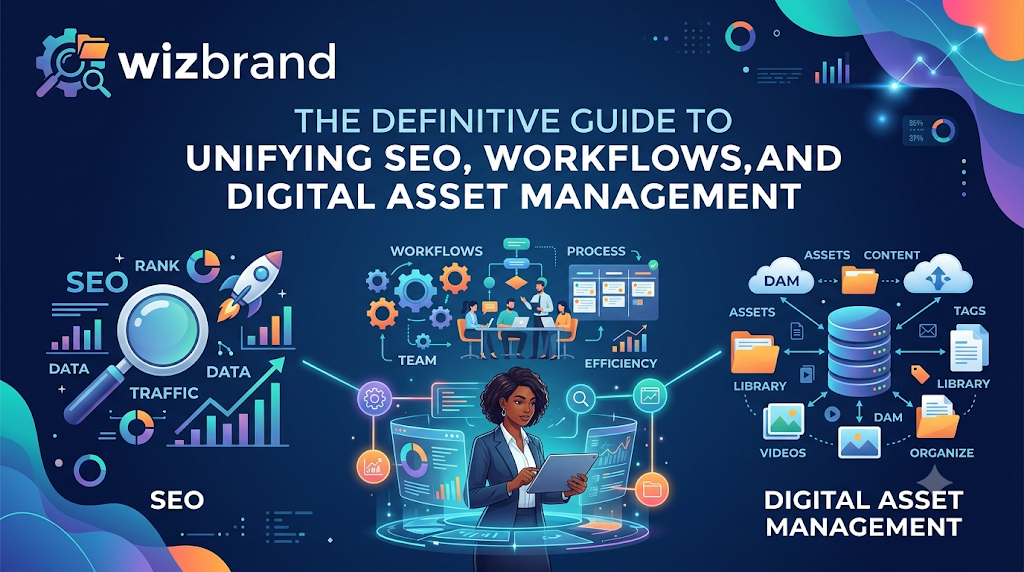
An all-in-one digital marketing platform is a centralized software ecosystem designed to manage, execute, monitor, and optimize cross-channel marketing operations from a single interface. Rather than stitching together isolated applications for keyword tracking, asset storage, and team communication, an integrated system consolidates these core capabilities into a single workspace.
       ┌─────────────────────────────────────────────────────────────┐
       │            ALL-IN-ONE DIGITAL MARKETING PLATFORM             │
       └──────────────────────────────┬──────────────────────────────┘
                                      │
        ┌─────────────────────────────┼─────────────────────────────┐
        │                             │                             │
   ┌────┴────┐                   ┌────┴────┐                   ┌────┴────┐
   │   SEO   │                   │WORKFLOW │                   │ DIGITAL │
   │MANAGEMENT                   │ & TASKS │                   │ ASSETS  │
   └────┬────┘                   └────┬────┘                   └────┬────┘
        │                             │                             │
  • Audits & Rank Tracking      • Task Assignments            • Version Control
  • Backlinks & Keywords        • Approval Queues             • Brand Asset Storage
        │                             │                             │
        └─────────────────────────────┼─────────────────────────────┘
                                      │
                       ┌──────────────┴──────────────┐
                       │   ANALYTICS & REPORTING     │
                       └─────────────────────────────┘
At its core, a unified marketing platform bridges the gap between strategy, execution, and analysis. It serves as a single source of truth for marketing data, assets, and project statuses.
A complete integrated platform natively combines several foundational operational pillars:
- Centralized Marketing Management: Consolidates multi-channel campaigns, performance analytics, and strategic roadmaps into unified command views.
- SEO & Organic Growth Tools: Combines technical site audits, rank tracking, keyword research, and backlink intelligence under one roof.
- Project & Workflow Automation: Standardizes task assignments, review processes, milestones, and cross-functional team collaboration.
- Digital Asset Management (DAM): Stores, organizes, and controls access to brand media, creative files, and documentation.
- Performance Reporting: Automatically aggregates multi-source metrics into real-time, client-ready, or executive dashboards.
Challenges of Managing Marketing with Multiple Tools
Relying on a disparate array of single-purpose marketing tools introduces hidden operational costs that steadily degrade team productivity and campaign performance over time.
                          ┌────────────────────────┐
                          │    FRAGMENTED STACK    │
                          └───────────┬────────────┘
                                      │
      ┌───────────────────┬───────────┴───────────┬───────────────────┐
      │                   │                       │                   │
┌─────┴──────┐     ┌──────┴──────┐         ┌──────┴──────┐     ┌──────┴──────┐
│ Context    │     │ Data        │         │ Operational │     │ Higher      │
│ Switching  │     │ Discrepancy │         │ Friction    │     │ Software    │
│ Costs      │     │ & Silos     │         │ & Friction  │     │ Overhead    │
└────────────┘     └─────────────┘         └─────────────┘     └─────────────┘
Disconnected Workflows and Context Switching
When content creators, SEO specialists, and graphic designers operate in isolated applications, context is constantly lost. Moving between project boards, external rank trackers, and cloud drives disrupts focus and causes misunderstandings regarding project scope or deliverables.
Scattered Data and Reporting Inconsistencies
Standalone applications calculate metrics differently. A rank tracking tool might report visibility using one algorithm, while a technical audit application uses another. Aggregating these conflicting data points into a coherent client report requires tedious manual export, cleanup, and reconciliation in external spreadsheets.
Inconsistent Collaboration and Communication Gaps
Feedback scattered across email threads, chat apps, and document comments leads to missed revisions and delayed sign-offs. Without a centralized hub, project managers spend more time hunting down status updates than driving strategic initiatives.
Duplicate Digital Assets and Version Control Issues
Without a dedicated digital asset management system connected directly to execution tools, teams risk using outdated logos, unapproved campaign graphics, or superseded creative brief templates. This waste of storage and effort weakens brand consistency across public touchpoints.
High Overhead and Subscription Fatigue
Managing dozens of software licenses across various departments inflates operational costs. Renewal dates become difficult to track, and companies often pay for redundant seats and overlapping features across separate applications.
Streamlining Operations with WizBrand
Addressing software sprawl requires moving away from fragmented toolsets toward an architecture designed around cross-functional collaboration. Platforms engineered specifically for unified operations bring structure to modern digital marketing workflows.
WizBrand serves as an all-in-one digital marketing platform designed to eliminate operational silos. By combining comprehensive search engine optimization capabilities with project management, digital asset storage, and workflow automation, it provides teams with a centralized workspace to manage campaigns end-to-end.
Rather than forcing marketers to adapt their processes to disconnected software, an integrated system like WizBrand aligns technical execution with high-level business goals. SEO specialists, content creators, brand strategists, and agency managers can collaborate within the same platform—ensuring data moves smoothly from research and strategy into execution and reporting.
SEO Management Software: Driving Organic Growth
Search engine optimization is an ongoing operational process requiring continuous research, technical refinement, and strategic content planning. Modern SEO management software integrates these disparate tasks into a structured workflow.
   ┌─────────────────────────────────────────────────────────────┐
   │                   ORGANIC GROWTH CYCLE                      │
   └──────────────────────────────┬──────────────────────────────┘
                                  │
      ┌───────────────────────────┼───────────────────────────┐
      │                           │                           │
┌─────┴──────────┐        ┌───────┴────────┐        ┌─────────┴────────┐
│ Discovery      │        │ Strategy       │        │ Execution        │
│ • Site Audits  │  ───►  │ • Keyword Map  │  ───►  │ • Content Creation│
│ • Backlinks    │        │ • Competitor   │        │ • Tech Fixes     │
└────────────────┘        └────────────────┘        └─────────┬────────┘
      ▲                                                       │
      │                       Measurement                     │
      └───────────────────────────────────────────────────────┘
                              • Rank Tracking
                              • Impact Reports
Effective organic strategy management relies on four core functions:
- Keyword Research and Strategic Mapping: Uncovering high-intent search queries, analyzing search volume dynamics, and organizing keywords into logical topical clusters that build search authority.
- Campaign Organization and Task Alignment: Translating technical audit discoveries and keyword opportunities directly into actionable development tasks and content production briefs.
- Continuous Technical Monitoring: Running automated site scans to detect emerging indexation errors, broken internal links, or site performance regressions before they harm search rankings.
- Impact Measurement: Tracking how technical fixes and content updates correlate directly with organic visibility gains and conversion growth over time.
Centralizing these activities within a single framework ensures search strategies are executed on schedule rather than languishing on isolated task lists.
Precision Insights with an SEO Rank Tracking Tool
Search engine results pages (SERPs) fluctuate constantly due to algorithm updates, seasonal shifts, and aggressive competitor strategies. Operating without precise SERP intelligence leaves marketing teams working in the dark.
An advanced SEO rank tracking tool delivers real-time visibility into keyword performance across target geographic regions, devices, and search engines.
+-----------------------------------------------------------------------------------+
| SERP POSITION MONITORING DASHBOARD                                                |
+---------------------------------+-------+--------+----------+---------------------+
| Target Keyword                  | Vol   | Pos    | Change   | Top Competitor      |
+---------------------------------+-------+--------+----------+---------------------+
| all-in-one marketing platform   | 8,100 | #3     | ▲ (+2)   | competitor-a.com    |
| seo project management software | 2,400 | #1     | ▬ (0)    | industry-leader.io  |
| technical audit tool            | 4,200 | #5     | ▼ (-1)   | search-tool.com     |
| digital asset management dam    | 9,600 | #2     | ▲ (+4)   | enterprise-dam.org  |
+---------------------------------+-------+--------+----------+---------------------+
Key features of enterprise-grade rank tracking include:
- Geographic & Device Segmentation: Tracking positions down to specific postal codes and isolating desktop performance from mobile experiences.
- SERP Feature Tracking: Monitoring visibility across featured snippets, local packs, image carousels, and People Also Ask (PAA) blocks.
- Competitor Benchmarking: Comparing keyword reach side-by-side against domain rivals to spot emerging traffic threats and strategic openings.
- Ranking Trend Analysis: Visualizing historical performance patterns to distinguish temporary algorithm testing from sustained structural rank changes.
Technical SEO Site Audit Tool: Building a Healthy Foundation
Even high-quality content will struggle to rank if search engine crawlers encounter severe technical friction on a domain. A robust technical SEO site audit tool continuously evaluates technical site health, surfacing issues before they impact organic visibility.
                  ┌─────────────────────────────────┐
                  │   TECHNICAL HEALTH ASSESSMENT   │
                  └────────────────┬────────────────┘
                                   │
      ┌────────────────────────────┼────────────────────────────┐
      │                            │                            │
┌─────┴───────────────┐  ┌─────────┴─────────────┐  ┌───────────┴───────────┐
│ CRAWL & INDEXATION  │  │ ON-PAGE STRUCTURE   │  │ PERFORMANCE & UX    │
├─────────────────────┤  ├─────────────────────┤  ├─────────────────────┤
│ • Robots.txt Blocks │  │ • Missing Titles    │  │ • Core Web Vitals   │
│ • Canonical Loops   │  │ • Duplicate H1s     │  │ • LCP & CLS Drifts  │
│ • 404 / Broken Link │  │ • Schema Validation │  │ • Mobile Usability  │
└─────────────────────┘  └─────────────────────┘  └─────────────────────┘
Critical technical elements systematically monitored include:
Indexation and Crawlability
Auditing robots.txt files, XML sitemaps, canonical tags, and HTTP status codes ensures search bots discover and index high-priority content efficiently without wasting crawl budget.
Metadata Integrity
Identifying missing, duplicate, or poorly structured page title tags, meta descriptions, and header tags across thousands of URLs simultaneously.
Core Web Vitals and Page Experience
Measuring key user experience parameters including Largest Contentful Paint (LCP), Interaction to Next Paint (INP), and Cumulative Layout Shift (CLS) across mobile and desktop environments.
Mobile Usability
Verifying responsive layout integrity, viewport formatting, and touch-target spacing to provide seamless experiences on small screens.
Authority Building via Backlink Analysis Tools
Inbound links remain one of the most significant ranking factors evaluated by modern search algorithms. Managing domain authority requires continuous oversight of incoming link profiles using a dedicated backlink analysis tool.
  ┌─────────────────────────────────────────────────────────────────┐
  │                   BACKLINK PROFILE EVALUATION                   │
  └────────────────────────────────┬────────────────────────────────┘
                                   │
       ┌───────────────────────────┼───────────────────────────┐
       │                           │                           │
┌──────┴──────────────┐   ┌────────┴─────────────┐   ┌─────────┴─────────────┐
│ Domain Authority    │   │ Anchor Text Balance  │   │ Link Risk Assessment  │
├─────────────────────┤   ├──────────────────────┤   ├───────────────────────┤
│ • Trust Flow Metric │   │ • Exact Match Ratio  │   │ • Spam Score Flags    │
│ • Referring Subnets │   │ • Branded Variations │   │ • Toxic Domain Audits │
│ • Link Velocity     │   │ • Naked URL Shares   │   │ • Disavow Exporting   │
└─────────────────────┘   └──────────────────────┘   └───────────────────────┘
An integrated backlink engine provides visibility into key authority indicators:
- Referring Domain Diversity: Evaluating link distribution across unique C-class IP blocks to measure true domain authority growth.
- Anchor Text Analysis: Auditing anchor text profiles to maintain a natural balance between branded, exact-match, and partial-match terms, preventing algorithmic penalties.
- Toxic Link Identification: Detecting unnatural link networks, automated comment spam, and low-quality directory placements that create risk.
- Competitive Link Gap Analysis: Comparing backlink portfolios against search competitors to uncover high-value link prospects and media placements.
SEO Project Management Software: Bridging Strategy and Execution
Strategy without execution yields no return. Traditional project management apps often lack the specialized context needed to run technical search marketing campaigns effectively.
Using tailored SEO project management software connects optimization insights directly to team task flows.
┌─────────────────────────────────────────────────────────────────────────────────┐
│ SEO PROJECT MANAGEMENT WORKSPACE                                                │
├───────────────────┬──────────────────────┬───────────────────┬──────────────────┤
│ BACKLOG           │ IN PROGRESS          │ QA & REVIEW       │ COMPLETED        │
├───────────────────┼──────────────────────┼───────────────────┼──────────────────┤
│ Fix 404 Errors on │ Optimize Meta        │ Core Web Vitals   │ Schema Markup    │
│ Product Pages     │ Descriptions (Q3)    │ Audit - Blog      │ Implementation   │
│ Priority: High    │ Priority: Medium     │ Priority: High    │ Priority: Critical│
│ Assignee: Dev     │ Assignee: Content    │ Assignee: SEO Tech│ Assignee: Dev    │
└───────────────────┴──────────────────────┴───────────────────┴──────────────────┘
Integrated project management transforms strategic insights into organized workflows by handling key operations:
- Contextual Task Creation: Converting site audit errors directly into actionable engineering tickets with one click.
- Milestone & Sprint Tracking: Organizing optimization efforts into structured sprints with deadlines, dependencies, and assigned owners.
- Cross-Functional Visibility: Giving developers, writers, and strategists shared context on why specific tasks matter for overall search performance.
- Resource Allocation: Managing team workloads across accounts to prevent operational bottlenecks and burnout.
Digital Marketing Workflow Management Software
Executing complex multi-channel campaigns requires coordinating multiple team members across sequential stages. Specialized digital marketing workflow management software automates these handoffs to maximize efficiency.
       ┌─────────────────────────────────────────────────────────────┐
       │             AUTOMATED CONTENT PRODUCTION WORKFLOW           │
       └──────────────────────────────┬──────────────────────────────┘
                                      │
 ┌─────────────────┐       ┌──────────┴──────┐       ┌─────────────────┐
 │ SEO Brief       │  ───► │ Content Draft   │  ───► │ Internal QA     │
 │ Generation      │       │ Assignment      │       │ & Fact Check    │
 └─────────────────┘       └─────────────────┘       └────────┬────────┘
                                                              │
 ┌─────────────────┐       ┌─────────────────┐                │
 │ Live Publishing │  ◄─── │ Stakeholder     │  ◄─────────────┘
 │ & SERP Re-audit │       │ Sign-off        │
 └─────────────────┘       └─────────────────┘
Workflow automation streamlines campaign delivery by:
- Eliminating Manual Handoffs: Automatically notifying stakeholders, updating task statuses, and assigning next-steps when project stages complete.
- Standardizing Approval Processes: Establishing clear review gates for legal, brand compliance, and technical QA before content goes live.
- Reducing Revision Cycles: Providing centralized comment threads and task histories to prevent conflicting feedback from different stakeholders.
- Predictive Deadline Tracking: Identifying stalled tasks early, allowing managers to adjust resources before target launch dates slip.
Digital Asset Management Software for Marketing Teams
As marketing teams produce higher volumes of digital content, maintaining a single, organized source of truth for assets becomes critical. Disorganized media storage causes lost productivity, licensed asset misuses, and inconsistent branding.
Integrated digital asset management software for marketing teams solves these challenges by combining robust media storage directly with campaign execution tools.
┌─────────────────────────────────────────────────────────────────────────┐
│ ENTERPRISE DIGITAL ASSET MANAGEMENT (DAM) HUB                           │
├───────────────────────────────┬─────────────────────────────────────────┤
│ TAXONOMY & METADATA           │ PERMISSIONS & VERSION CONTROL           │
├───────────────────────────────┼─────────────────────────────────────────┤
│ • Automated AI Tagging        │ • Role-Based Access Controls (RBAC)     │
│ • Custom Folder Hierarchies   │ • Historical Revision Tracking          │
│ • Brand Asset Categorization  │ • Public & Private Share Link Expiration│
│ • Licensing Rights Oversight  │ • Direct Content Engine Attachments     │
└───────────────────────────────┴─────────────────────────────────────────┘
Core DAM functionality includes:
Centralized Asset Library
Storing brand guidelines, high-res images, video files, ad creatives, and documentation in a structured environment with universal search capabilities.
Automated Metadata Tagging
Using automated tagging to index files by campaign, channel, format, and content topic—ensuring assets are instantly retrievable.
Version Control & Audit Trails
Tracking file changes over time to prevent accidental overwrites, while ensuring team members always use the current, approved asset version.
Role-Based Access Control
Managing granular read, edit, and download permissions for internal teams, external contractors, and agency clients to keep sensitive materials secure.
Influencer Marketing Marketplace: Scaling Creator Partnerships
Creator partnerships have become a primary driver of brand discovery and backlink acquisition. However, managing influencer initiatives via spreadsheets is notoriously difficult to scale.
An integrated influencer marketing marketplace connects brands directly with vetted content creators inside their primary marketing ecosystem.
  ┌─────────────────────────────────────────────────────────────────┐
  │                 INFLUENCER CAMPAIGN LIFECYCLE                   │
  └────────────────┬────────────────────────────────────────────────┘
                   │
       ┌───────────┼───────────────────────────┐
       │           │                           │
┌──────┴─────────┐ ┌─────────┴──────────┐ ┌─────┴───────────┐
│ DISCOVERY      │ │ CAMPAIGN EXECUTION │ │ METRICS         │
├────────────────┤ ├────────────────────┤ ├─────────────────┤
│ • Vetted Hub   │ │ • Secure Contracts │ │ • Reach Tracking│
│ • Demographics │ │ • Brief Delivery   │ │ • Engagement    │
│ • Fraud Check  │ │ • Deliverable QA   │ │ • Attribution   │
└────────────────┘ └────────────────────┘ └─────────────────┘
Managing influencer campaigns within a unified platform simplifies every stage of creator management:
- Discovery & Vetting: Filtering creators by audience demographics, engagement ratios, niche relevance, and audience authenticity metrics.
- Outreach & Negotiation: Standardizing outreach communications, campaign briefs, deliverables, and payment agreements within a centralized interface.
- Asset & Content Approval: Reviewing and approving creator submissions before public release to ensure brand guidelines are met.
- Performance Attribution: Tracking referral traffic, earned media value, and backlink impact generated across creator partnerships.
SEO Software for Agencies: Scaling Client Operations
Digital marketing agencies face unique operational pressures. Managing dozens of client accounts across disconnected tools creates overhead that erodes profit margins.
Dedicated SEO software for agencies addresses these friction points by providing multi-tenant management capabilities within a single workspace.
┌───────────────────────────────────────────────────────────────────────────┐
│ MULTI-TENANT AGENCY DASHBOARD                                             │
├───────────────────┬───────────────────┬───────────────────┬───────────────┤
│ Client Account    │ Active Campaigns  │ Health Score      │ Quick Report  │
├───────────────────┼───────────────────┼───────────────────┼───────────────┤
│ Apex Enterprises  │ 4 Active / 0 Wait │ 98% (Optimal)     │ [ Generate ]  │
│ Nexus Logistics   │ 2 Active / 1 Wait │ 84% (Needs Attn)  │ [ Generate ]  │
│ Horizon Retail    │ 8 Active / 0 Wait │ 92% (Optimal)     │ [ Generate ]  │
└───────────────────┴───────────────────┴───────────────────┴───────────────┘
Key features that enable agency growth include:
- White-Label Reporting: Customizing client performance reports with agency branding, custom color palettes, and curated KPI metrics.
- Client Portal Access: Providing clients with read-only interactive dashboards, reducing ad-hoc status requests and improving transparency.
- Cross-Account Management: Toggling between client workspaces instantly without managing separate software logins or credentials.
- Scalable Operations: Standardizing optimization playbooks across accounts to maintain deliverable quality as client rosters grow.
Real Business Use Cases
Marketing Agencies
Agencies leverage unified platforms to streamline client onboarding, track campaign tasks across multi-disciplinary teams, and automate monthly performance reporting—reducing administrative overhead while improving retention.
Ecommerce Brands
Online retailers use integrated platforms to track thousands of product keywords, fix technical crawl errors across massive page catalogs, manage promotional campaign assets, and scale creator affiliate campaigns during peak shopping seasons.
SaaS Companies
Software providers align organic content strategy with user acquisition pipelines. By uniting keyword research, content workflows, and technical auditing, SaaS marketing teams build topical authority and drive sustainable product-led growth.
Enterprises
Large enterprise operations rely on centralized systems to enforce brand guidelines across international subsidiaries, manage complex security permissions, and unify reporting across regional marketing groups.
Small and Medium Businesses (SMBs)
Resource-constrained SMBs eliminate the high software costs of multi-tool stacks while gaining enterprise-grade marketing, rank tracking, and project management capabilities within a manageable footprint.
In-House Marketing Teams
Internal teams use integrated workspaces to coordinate work between strategists, copywriters, and developers, keeping stakeholders aligned on high-impact revenue initiatives.
Digital Consultants
Independent consultants use integrated toolsets to conduct rapid client site audits, execute competitive backlink research, and deliver executive-ready strategic roadmaps without juggling multiple subscriptions.
Comparative Analysis
Table 1: Traditional Stack vs. Integrated Marketing Platform
| Operational Dimension | Traditional Disconnected Stack | Integrated Digital Marketing Platform |
|---|---|---|
| Data Aggregation | Manual export/import via CSVs and spreadsheets | Automated real-time synchronization across modules |
| Workflow Efficiency | High context-switching friction across disconnected tools | Unified workspace with direct task and asset linking |
| Software Overhead | High cumulative subscription costs across vendors | Predictable, consolidated platform pricing |
| Brand Consistency | High risk of asset fragmentation and version conflicts | Centralized asset management with strict permissions |
| Reporting Speed | Hours spent manually consolidating multi-source data | Automated client-ready and executive dashboards |
| Team Collaboration | Fragmented communications across email and chat apps | Contextual comments within specific project tasks |
Table 2: Feature Matrix: Standalone Tools vs. WizBrand
| Operational Capability | Multiple Standalone Tools | WizBrand Unified Workspace |
|---|---|---|
| SEO Site Auditing | Requires dedicated software (e.g., Screaming Frog) | Built-in technical audit engine |
| SERP Rank Tracking | Requires standalone tracker subscription | Integrated multi-location rank tracking |
| Backlink Analysis | Requires third-party index tool | Built-in backlink monitoring engine |
| Task & Project Management | Handled in external apps (e.g., Asana, Trello) | Native marketing project management boards |
| Digital Asset Storage | Generic cloud drives (e.g., Google Drive, Dropbox) | Purpose-built marketing DAM with metadata |
| Creator Marketplace | Third-party broker networks | Integrated influencer discovery module |
| White-Label Reporting | Manual assembly or paid reporting add-ons | Native automated custom-branded reports |
Why Unified Marketing Platforms Are the Future
The digital marketing landscape rewards agility, consistency, and operational clarity. As organic search channels become more competitive, success depends less on isolated tactics and more on operational execution speed.
       ┌─────────────────────────────────────────────────────────────┐
       │             THE UNIFIED PLATFORM ADVANTAGE                  │
       └──────────────────────────────┬──────────────────────────────┘
                                      │
 ┌─────────────────┐       ┌──────────┴──────┐       ┌─────────────────┐
 │ Operational     │  ───► │ Data            │  ───► │ Scalable        │
 │ Velocity        │       │ Integrity       │       │ Growth          │
 └─────────────────┘       └─────────────────┘       └─────────────────┘
Unlocking Operational Velocity
Eliminating operational drag allows teams to execute campaigns faster. When technical site audit findings convert instantly into developer tasks, and pre-approved assets are directly linked within content workflows, launch cycles shorten dramatically.
Ensuring Data Integrity and Single-Source Truth
Decisions made on fragmented data introduce risk. Consolidating search analytics, technical site health metrics, and workflow tracking inside a single architecture guarantees that leadership evaluates performance using consistent, reliable data points.
Scaling Operations without Linear Overhead
Growing a marketing organization or agency roster using fragmented tools requires hiring extra operational staff just to manage administrative friction. Unified systems automate repetitive administrative tasks, allowing teams to scale client capacity and content output efficiently.
Best Practices for Marketing Consolidation
To maximize the value of an integrated digital marketing platform, organizations should follow a structured implementation plan:
┌─────────────────────────────────────────────────────────────────────────┐
│ IMPLEMENTATION ROADMAP                                                  │
├─────────────────────────────────────────────────────────────────────────┤
│ PHASE 1: Audit stack & identify operational bottlenecks                 │
│ PHASE 2: Consolidate core brand assets into the central DAM library     │
│ PHASE 3: Standardize project templates, approval gates & task workflows │
│ PHASE 4: Establish baseline rank tracking & schedule site audits        │
│ PHASE 5: Configure automated stakeholder & client reporting cadence     │
└─────────────────────────────────────────────────────────────────────────┘
- Conduct a Stack Audit: Document every marketing tool, browser extension, and cloud drive subscription currently used across departments. Identify redundant costs and disconnected workflows.
- Standardize Asset Organization: Migrate logos, brand documentation, image libraries, and campaign creatives into the central digital asset library. Establish consistent tagging rules and folder structures.
- Map Task Workflows: Standardize campaign execution steps before building automated boards. Define clear task owners, review procedures, and milestone targets.
- Establish Technical Baselines: Run an initial site audit and configure primary rank tracking keywords to record benchmark metrics before launching new strategic initiatives.
- Automate Reporting Cycles: Set up automated weekly and monthly dashboards for internal stakeholders and external clients to save administrative time.
Frequently Asked Questions
What is an all-in-one digital marketing platform? An all-in-one digital marketing platform is a consolidated workspace that integrates search engine optimization, project management, digital asset libraries, campaign workflows, and performance analytics into a single software solution.
How does an integrated marketing platform reduce software costs? Consolidating operations into an integrated system eliminates redundant subscriptions for standalone rank trackers, site audit software, task boards, cloud drives, and reporting tools—reducing overall technology expenses.
Why is native project management critical for SEO teams? Integrated project management allows technical site audit flags, keyword research opportunities, and backlink targets to convert directly into assigned tasks, ensuring strategic insights lead to timely execution.
How does digital asset management improve brand consistency? A centralized DAM system acts as a single source of truth for media files, templates, and brand guidelines. This ensures internal teams and agency partners always use approved, current assets.
Can an integrated platform replace all point marketing tools? For most organizations, an integrated platform replaces the vast majority of daily marketing applications—including standalone SEO suites, task boards, DAM systems, and reporting tools—into a unified workflow.
How do agency white-label reports work inside a unified system? White-label reporting allows agencies to automatically compile live data from rank tracking, site health audits, and campaign tasks into customized, client-ready reports featuring their agency logo and branding.
What is the difference between rank tracking and a full SEO site audit? Rank tracking measures SERP keyword positions over time across locations and devices, while a site audit analyzes structural domain health, indexation issues, canonical errors, and Core Web Vitals performance.
How does workflow automation help marketing teams hit deadlines? Workflow automation removes manual handoffs by automatically routing tasks to the next owner, triggering notifications for upcoming deliverables, and preventing project bottlenecks.
Why is competitor backlink analysis important? Analyzing competitor backlink profiles reveals high-value link sources, anchor text distribution strategies, and content opportunities, helping teams build targeted authority acquisition campaigns.
Is an all-in-one platform suitable for small businesses? Yes. Small businesses benefit significantly from consolidated platforms because they gain enterprise-grade SEO, asset management, and task automation capabilities without the expense and complexity of managing multiple vendors.
Conclusion
Managing modern digital marketing operations using fragmented tools creates operational drag, data discrepancies, and ballooning software costs. Unifying search engine optimization, campaign management, media assets, and reporting within a cohesive ecosystem transforms marketing teams from reactive task managers into strategic growth drivers.
By combining technical site audits, rank tracking, backlink intelligence, project automation, and digital asset management within a single environment, platforms like WizBrand empower agencies, enterprises, and growing brands to scale their online presence efficiently.
Transitioning to a unified workspace streamlines daily workflows, builds long-term topical authority, and accelerates campaign execution across your entire organization. To see how an integrated platform can streamline your marketing operations, explore the capabilities of WizBrand today.
