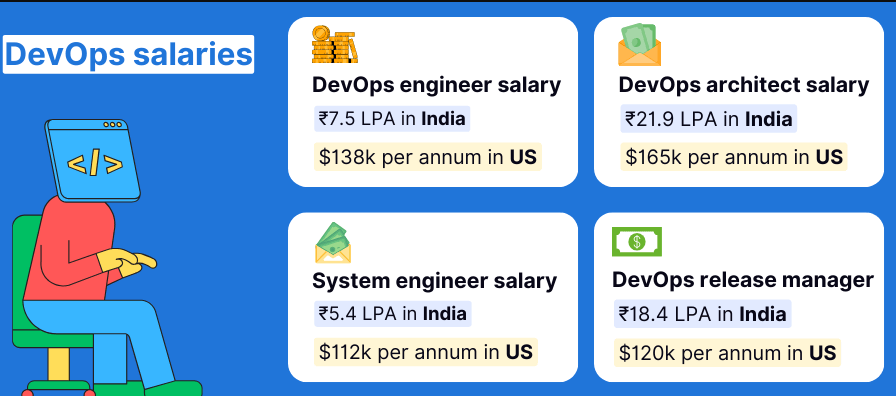
The technology sector suffers from massive title ambiguity. The label “DevOps salary” is attached to everything from junior script maintenance to the architectural oversight of globally distributed, highly resilient infrastructure. Consequently, determining the true market value of your abilities can be exceptionally frustrating.
The underlying reality of modern infrastructure compensation is simple: your financial reward is directly proportional to the business risk you neutralize. If your daily output revolves solely around maintaining continuous integration pipelines, your earning potential will inevitably hit a ceiling. However, when your engineering decisions actively prevent catastrophic data breaches, ensure flawless system uptime, or dramatically slash monthly cloud expenditures, your market value skyrockets.
Many practitioners struggle to elevate their income because they treat baseline operational tasks as premium differentiators. To command top-tier compensation in the current landscape, you must transition from being a tactical implementer to operating as a strategic platform owner.
Here is a heavily researched, data-centric breakdown of the infrastructure labor market, actual compensation trajectories, and the specific capabilities required to secure the industry’s highest paychecks.
The Current DevOps Technology Job Market
The hiring ecosystem for infrastructure professionals essentially operates within three distinct financial environments:
- Technology Giants and Hyperscalers: These organizations rely heavily on equity and stock-based compensation. Here, Site Reliability Engineering (SRE) and Platform Engineering are elite disciplines, and practitioners are placed on the exact same lucrative pay scales as core software developers.
- Highly Regulated Enterprises: Sectors like banking, healthcare, and insurance offer massive cash bonuses. They place a premium on engineers who can architect compliant environments, enforce security guardrails, and automate rigorous audit trails.
- IT Consultancies and Agencies: Often driven by billable hour metrics, these environments generally feature lower compensation ceilings. The “DevOps” title is frequently utilized as a modern rebrand for traditional system administration.
The Automation Shift: Employers are aggressively raising their hiring standards because intelligent automation and machine learning utilities now handle predictive scaling and routine alert remediation. With low-level operational toil disappearing, organizations are willing to pay massive premiums for individual contributors who possess deep expertise in complex distributed systems, financial governance, and developer productivity.
Understanding DevOps Salary Growth
Your paycheck does not simply scale with your years of tenure; it expands alongside your sphere of architectural influence.
- Entry-Level (The Implementer): You execute clearly defined procedures, monitor dashboards, and learn standard incident response protocols. Your compensation reflects the industry’s baseline operational rate.
- Mid-Level (The Automator): You can independently provision cloud infrastructure, untangle broken delivery pipelines, and resolve standard outages without requiring supervision. Your salary sees a reliable, steady upward trajectory.
- Senior-Level (The Architect): This represents the major financial inflection point. You design fault-tolerant systems from the ground up, command major incident war rooms, and dictate engineering standards.
- Principal/Staff-Level (The Strategist): You solve massive reliability and scaling challenges for the entire enterprise. By treating the internal developer platform as a flagship product, your compensation directly rivals the highest-paid software architects in the market.
Mandatory DevOps Salary Comparison Table
The following metrics reflect market median base salaries (in USD) to illustrate the financial premiums attached to highly specialized technical disciplines. Proportional multipliers apply to global markets.
| Role / Technology | Beginner Salary | Mid-Level Salary | Senior Salary | Demand Level | Growth Potential |
| DevOps Engineer (Core) | $92,058 | $115,072 | $143,840 | High | Standard |
| Site Reliability Engineer | $99,422 | $124,278 | $155,347 | Very High | Excellent (+15% Premium) |
| Platform Engineer | $103,105 | $128,881 | $161,101 | Very High | Excellent (+20% Premium) |
| DevSecOps Engineer | $108,628 | $135,785 | $169,731 | Critical | Exceptional (+30% Premium) |
| Cloud Systems Engineer | $85,000 | $106,000 | $132,000 | Steady | Moderate |
| Cloud Economist / FinOps | $96,000 | $120,000 | $150,000 | Emerging | High (+25% Premium) |
Highest Paying DevOps Skills & Technologies
To push your compensation significantly above standard market averages, you must specialize in disciplines that actively protect the enterprise’s bottom line:
1. Security Integration (DevSecOps)
Organizations willingly pay exceptional premiums for professionals who can weave vulnerability scanning, image signing, and strict policy-as-code seamlessly into developer workflows. Preventing a single regulatory fine or data breach provides an immediate, massive return on investment for the business.
2. Resilience Engineering (SRE)
Managing Service Level Objectives (SLOs), calculating precise error budgets, and establishing predictive alerting pays exponentially more than simply closing support tickets. SREs guarantee that revenue-generating applications remain highly available.
3. Cloud Economics (FinOps)
As enterprise cloud expenditures spiral upward, engineers who understand both Kubernetes architecture and unit economics become invaluable. If your infrastructure redesign saves the company hundreds of thousands of dollars, you possess ultimate negotiation leverage.
4. Internal Developer Platforms (Platform Engineering)
Building intuitive, self-service portals that allow software engineers to deploy code safely and autonomously. Treating internal developers as your primary customers is the most direct route to capturing premium software engineering pay scales.
Skills vs. Certifications vs. Experience in DevOps Salary Growth
Understanding what actually carries weight during a compensation negotiation is critical for your career:
- Demonstrated Track Record (Maximum Leverage): Nothing beats proving you have successfully orchestrated multi-region cloud deployments or spearheaded massive infrastructure cost-reduction initiatives. Scarcity and proven impact are your best negotiation tools.
- Applied Capabilities (Strong Leverage): Knowing how to operate Terraform, Kubernetes, or CI/CD orchestrators is the absolute prerequisite. Your financial worth is determined by how creatively you apply these tools to eliminate complex business bottlenecks.
- Certifications (Strategic Leverage): Credentials like the AWS Certified Solutions Architect or advanced Kubernetes administration badges are highly effective for bypassing automated HR filters. However, during the final stages of a technical interview, hiring committees evaluate your practical system design logic, not your collection of digital certificates.
Common Career Mistakes That Slow DevOps Salary Growth
- The Pipeline Silo: If your entire professional identity revolves around maintaining CI/CD logic, your income will flatline. Pipeline orchestration is a heavily commoditized skill that no longer commands top-tier pay.
- Financial Blindspots: Designing highly scalable architectures without strictly monitoring their operational costs makes you a liability to the finance department and restricts your upward mobility.
- Tool Hopping: Constantly switching between different configuration management platforms instead of mastering the foundational, agnostic concepts of immutable infrastructure limits your architectural value.
- Embracing Hero Culture: Remaining in environments that refuse to automate repetitive toil and rely entirely on your personal burnout to maintain system uptime is a guaranteed path to career and salary stagnation.
Smart DevOps Career Growth Roadmap
Follow this strategic progression path to continuously compound your earning potential:
Phase 1: The Foundation (Beginner)
- Focus: Master Linux internals, version control, fundamental cloud networking, and essential scripting.
- Objective: Execute tasks reliably to build operational consistency and team trust.
- Compensation Strategy: Secure your first dedicated infrastructure role, prioritizing environments that offer the strongest technical mentorship over the highest initial base salary.
Phase 2: The Automator (Mid-Level)
- Focus: Dive deep into Infrastructure as Code, container orchestration, and comprehensive observability metrics.
- Objective: Independently provision environments and automate manual bottlenecks entirely out of existence.
- Compensation Strategy: Negotiate salary increases based on your demonstrated ability to accelerate release velocity and eliminate human deployment errors.
Phase 3: The Enterprise Architect (Advanced)
- Focus: Distributed systems architecture, DevSecOps integration, intelligent remediation, and building self-service developer portals.
- Objective: Transition from managing pipelines to owning a comprehensive internal platform, managing enterprise risk, and driving total engineering efficiency.
- Compensation Strategy: Push for principal titles mapped directly to software engineering ladders, negotiating strictly based on mitigated business risk and aggregate engineering bandwidth saved.
Future DevOps Salary Trends
Standard operations roles will face increasing salary stagnation as intelligent agents and AI utilities handle routine infrastructure maintenance. The massive financial upside lies entirely in specialized, high-risk disciplines. Platform Engineering, advanced DevSecOps, and applying the principles of intelligent automation to large-scale distributed systems will continue to drive explosive compensation growth.
Who Should Read This
- Junior Engineers: To bypass legacy operations roles and target high-value architectural skills immediately.
- Mid-Career Professionals: To understand why compensation plateaus and how to strategically pivot into high-paying SRE or Platform Engineering roles.
- Software Developers: To grasp the massive financial upside of understanding the infrastructure that powers their code.
- Engineering Leadership: To accurately align department budgets with the compensation realities of the modern technical labor market.
FAQ Section
1. Does mastering Kubernetes guarantee top-tier pay?
No. Basic cluster administration is now a standard industry requirement. Designing resilient, cost-effective, multi-tenant Kubernetes architectures is what actually commands premium compensation.
2. Do infrastructure engineers out-earn software developers?
It depends entirely on the employer. In technology giants, SREs and Platform Engineers share the exact same pay scale as product developers. In older legacy enterprises, core product developers often earn more.
3. Which credentials offer the best financial return?
Certifications that focus on complex architecture, such as advanced cloud architect credentials, offer excellent return on investment when backed by hands-on, practical project work and demonstrable system design skills.
4. Why does DevSecOps command such a high salary premium?
The talent pool for engineers who understand both advanced infrastructure deployment and deep security protocols is incredibly small. Furthermore, their ability to prevent catastrophic financial losses from data breaches carries massive value for the enterprise.
5. Will intelligent automation eliminate infrastructure careers?
Automation eliminates operational toil, such as log parsing and routine ticket resolution. It does not replace the high-level architectural planning, complex incident command, and strategic vision required to build reliable platforms that warrant premium salaries.
Strong Conclusion
The era of securing premium compensation simply by knowing how to operate a few automation utilities has definitively ended. Your earning potential is intrinsically tied to your ability to mitigate enterprise risk and accelerate secure product delivery. To break into the elite earning tiers, you must evolve past tactical implementation.
Start treating infrastructure as a comprehensive software product. Focus intensely on security, master the economics of cloud computing, and build internal platforms that empower developers to do their best work. When you can definitively prove that your engineering protects revenue, ensures flawless reliability, and optimizes corporate costs, your salary ceiling vanishes entirely.
Align your technical expertise directly with the core financial drivers of the business. The most successful engineers never stop questioning the underlying architecture of their tools, turning everyday operations into strategic business advantages.
If you want to secure the highest possible compensation, start building skills that directly protect the business. Research the specific requirements for SRE or Platform Engineering roles in your target market, and begin engineering your way to your next major salary milestone.
