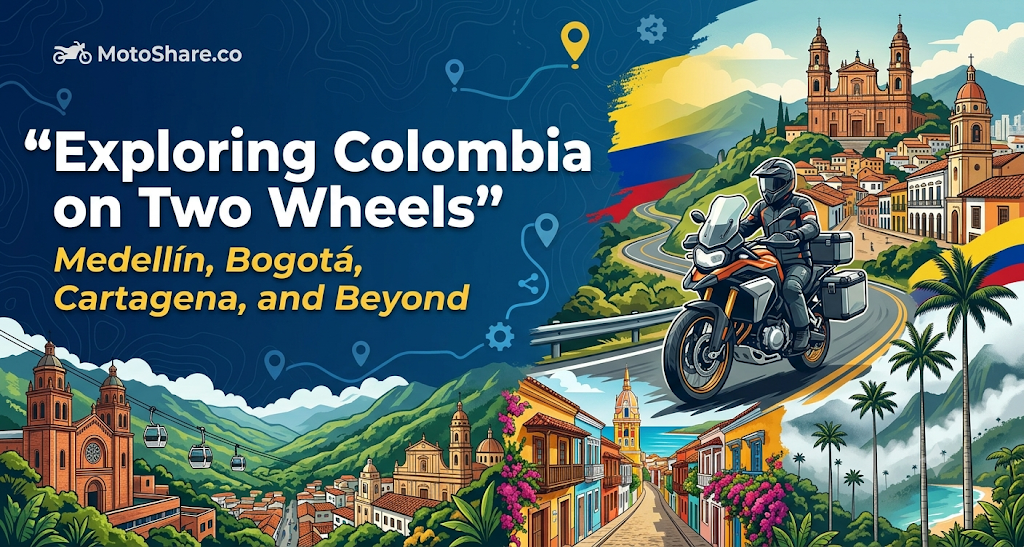
Introduction — Discover Colombia with MotoShare.co
Colombia is a land of striking geographical contrasts. Within its borders, modern urban skylines give way to towering Andean passes, lush coffee-carpeted valleys, and sun-drenched Caribbean coastlines. Experiencing this variety on your own schedule offers an unmatched sense of travel freedom, allowing you to venture beyond traditional tour bus routes and discover local communities at your own rhythm. As self-drive and independent travel continue to grow across South America, researching reputable vehicle rental platforms like MotoShare.co provides travelers with a solid foundation to evaluate suitable transport options for their upcoming journey.
Choosing the right mode of transport—whether that involves a versatile dual-sport motorcycle, an agile city scooter, or an enclosed rental car—depends heavily on your planned itinerary, route topography, driving experience, and overall budget. Navigating high-altitude mountain switchbacks requires a very different preparation level than cruising coastal highways or running quick errands in a dense metropolitan area. By understanding the practical realities of vehicle hire early in your trip planning, you can make informed decisions that keep your travel safe, comfortable, and seamless.
This comprehensive guide covers everything you need to know about independent mobility in Colombia. From navigating major hubs like Medellín, Bogotá, and Cartagena to comparing scooter utility, adventure touring readiness, guided group options, and car hire alternatives, you will find practical advice designed to help you plan an unforgettable Colombian journey.
Why Consider Motorcycle Rental in Colombia?
Few modes of transport offer the sensory connection to the landscape that motorcycling provides. Riding along Colombia’s extensive highway network places you directly in the environment: the crisp, thin air of the high cordilleras, the humid breeze of the Magdalena River valley, and the aroma of roadside roadside eateries serving fresh arepas and local coffee.
Opting for a motorcycle rental Colombia gives you the flexibility to adapt your itinerary on the fly. You are not bound by fixed public transit timetables or group tour schedules. If a scenic overlook in the mountains catches your eye, or an afternoon rain shower prompts an impromptu rest stop in a colonial square, traveling on two wheels accommodates that spontaneous pace. Furthermore, motorcycles often navigate heavy municipal traffic and tight village alleys more easily than larger vehicles, saving time during peak travel hours.
However, independent riding is not universally suitable for every traveler or route. Colombia’s topography presents unique challenges:
- Steep Gradients and Hairpin Turns: Andean routes frequently feature sharp switchbacks, variable pavement quality, and sudden changes in elevation.
- Aggressive Traffic Flow: Traffic conventions in major commercial corridors can feel intense for those unaccustomed to Latin American driving norms.
- Variable Weather Patterns: Mountain weather changes rapidly, transitioning from warm sunshine to blinding downpours within minutes.
For travelers journeying with family, carrying hard-shell luggage, traveling in larger groups, or simply preferring climate-controlled comfort and structural weather protection, a rental car is often the more practical and stress-free option. Weighing these factors honestly against your riding background is the first step toward a successful road journey.
Motorcycle Rental in Medellín — Explore the City and Surroundings
Known as the “City of Eternal Spring” due to its year-round temperate climate, Medellín sits nestled within the steep Aburrá Valley. It serves as an exceptional starting point for regional riding, providing easy access to the picturesque departmental roads of Antioquia.
When planning a motorcycle rental Medellin, riders must first understand local city riding dynamics. Traffic within the metropolitan center is dense, with high concentrations of delivery motorbikes, buses, and taxis sharing narrow multilane corridors. Street parking is tightly regulated, meaning riders should prioritize secure, paid parking garages (parqueaderos) rather than leaving unattended bikes on public sidewalks or curbs.
Beyond city limits, Antioquia offers spectacular day rides and weekend loops:
- Guatapé and El Peñol: A popular eastern route featuring smooth tarmac, rolling hills, and panoramic reservoir views.
- Santa Fe de Antioquia: A warmer, descent-heavy route heading northwest toward a preserved colonial settlement, accessed via modern tunnels and winding mountain sectors.
- Jardín and Jericó: Longer southern journeys into the heart of coffee country, blending sweeping paved roads with occasional rough surfaces.
Before heading into the mountains, always check local fuel stops. While petrol stations are abundant near major toll roads, rural stretches through remote valleys can have long distances between pumps. Additionally, verify your rental agreement’s permitted operational radius to ensure your insurance coverage remains valid outside municipal borders.
Motorcycle Rental in Bogotá — Plan Your Ride Carefully
Operating at an elevation of roughly 2,600 meters (8,500 feet) above sea level, Colombia’s sprawling capital presents an entirely different set of operational conditions. The climate here is cooler, rainfall is frequent, and the urban footprint is immense.
Securing a motorcycle rental Bogota demands thorough logistical preparation:
- Urban Congestion: Bogotá consistently ranks among the most congested metropolitan areas in the world. Traffic jams (trancónes) can halt progress for hours, particularly along key arterial avenues such as Carrera Séptima, Calle 26, and the Autopista Norte.
- Weather and Gear: High altitude means lower ambient temperatures. Combined with wind chill and sudden rain, proper riding gear—including a thermal base layer, a certified full-face helmet, insulated gloves, and reliable waterproofs—is non-negotiable.
- Departure Timing: If you plan to ride out of the savannah toward lower, warmer regions like Girardot or Villa de Leyva, depart before dawn or after mid-morning rush hours to clear urban bottlenecks smoothly.
- Local Traffic Regulations: Bogotá implements various municipal traffic restrictions. Always ask your rental provider about local ordinances that apply to motorized two-wheelers, including lane restrictions on bus corridors (TransMilenio lanes) and mandatory reflective vest rules during evening hours.
Only venture onto Bogotá’s high-speed bypasses and mountain exits if you have confident clutch control, sharp hazard perception, and prior experience managing congested urban intersections.
Motorcycle Rental in Cartagena — Explore the Caribbean Coast
Located on the northern coast, Cartagena de Indias blends historic Spanish fortifications with modern coastal resort developments. The riding environment here is characterized by tropical heat, high humidity, and direct coastal trade winds.
Arranging a motorcycle rental Cartagena can be an enjoyable way to explore destinations situated along the Caribbean highway, such as the coastal route toward Barranquilla or rural bypasses leading south toward coastal fishing villages. However, an open perspective on local geography is essential:
- The Walled City (Centro Histórico): The historic colonial center consists of narrow, cobblestone streets, heavy pedestrian traffic, horse-drawn carriages, and strict vehicle access limits. Exploring this specific historic district is far more enjoyable on foot or by hailing a standard local taxi.
- Hydration and Sun Exposure: The coastal sun is intense. Dehydration and heat fatigue impair rider reflexes quickly. Wear ventilated, abrasion-resistant mesh gear rather than heavy non-breathable jackets, and carry water at all times.
- Document and Belonging Security: Keep personal belongings, identification, and rental papers inside a locked top box or a secure, water-resistant crossbody bag rather than open handlebar pockets or loose nets.
Ensure you check local coastal road conditions before setting off; ocean breezes can blow loose sand across coastal blacktop, reducing tire traction around sweepers.
Scooter Rental in Colombia — A Practical Option for Short Trips
Scooters represent a distinct category within the world of two-wheel rentals. Built with automatic continuously variable transmissions (CVT), smaller diameter wheels, step-through frames, and modest engine displacements (typically between 110cc and 150cc), they are engineered for urban commuting rather than high-speed touring.
A scooter rental Colombia can be a practical, user-friendly choice under the right circumstances:
- Short Metropolitan Errands: Scooters excel at low-speed commuting between neighborhood cafes, co-working hubs, and local accommodations in flatter urban districts.
- Twist-and-Go Simplicity: Without a manual clutch or foot gear selector, they reduce rider workload in stop-and-start traffic.
- Under-Seat Storage: Built-in compartments provide convenient lockable space for a small backpack, groceries, or a rain poncho.
However, riders must not assume scooters are inherently safer or universally capable:
- Small Wheel Dynamics: Smaller wheels are significantly more vulnerable to road imperfections, unexpected potholes, speed humps (resaltos), and slick painted road markings.
- Engine Limitations: Modest horsepower makes climbing steep Andean valley roads two-up slow and strenuous on the mechanical components.
- Licensing Requirements: Even small-displacement scooters require a valid driver’s license with appropriate motorcycle endorsements in Colombia. Riding without the proper category invalidates insurance coverage.
Always inspect braking response, tire tread depth, and mirror adjustments before riding a rental scooter off the provider’s lot.
Adventure Motorcycle Rental in Colombia — Prepare for Scenic Routes
For experienced motorcyclists looking to cross multiple mountain ranges or explore regional unpaved backroads, choosing a purpose-built dual-sport or adventure (ADV) touring bike is the gold standard. These machines feature larger spoked wheels, long-travel suspension, upright ergonomics, robust luggage racks, and larger fuel tanks.
Securing an adventure motorcycle rental Colombia opens access to varied terrains, but it also increases your operational responsibilities:
- Matching Machine to Terrain: Adventure bikes range from lightweight single-cylinder dual-sports (250cc–300cc) to heavyweight multi-cylinder touring bikes (650cc–1200cc). Heavy ADV bikes require advanced handling skills on loose gravel, wet clay, or muddy detours.
- Paved vs. Unpaved Clearances: Do not assume that renting an adventure motorcycle gives you permission to ride any single-track trail or riverbed. Most rental contracts distinguish strictly between paved public roads, maintained gravel roads, and off-road trails. Off-road misuse often voids vehicle insurance.
- Seasonal Weather Variations: The rainy seasons (typically April–May and October–November in central Colombia) can cause landslides (derrumbes) along unpaved mountain roads. Always consult regional transit updates before crossing secondary mountain passes.
- Self-Sufficiency: Adventure touring demands preparation for remote stretches. Carry a portable 12V air compressor, a basic tire puncture repair kit, offline GPS mapping tools, and emergency contact numbers.
Motorcycle Tours in Colombia — Guided Trips or Independent Travel?
When deciding how to explore Colombia, riders generally choose between planning a self-directed trip and joining an organized tour. Each model offers clear trade-offs depending on your travel preferences, available time, and comfort with foreign logistical planning.
Taking part in organized motorcycle tours Colombia provides distinct benefits:
- Curated Route Knowledge: Tour operators employ lead riders who know which mountain routes offer clean asphalt, where construction delays are occurring, and which rural towns offer safe, comfortable lodging.
- Support Vehicles: Many guided tours include a chase van that carries your main luggage, spare parts, and tools, freeing your motorcycle from heavy loads.
- Built-in Safety Infrastructure: Group tours often handle emergency logistics, medical coordination, and mechanical swaps if a vehicle suffers an unfixable roadside breakdown.
Conversely, independent travel delivers absolute freedom:
- Itinerary Flexibility: You wake up and ride when you want, stay an extra day in a town you fall in love with, and choose restaurants matching your own tastes and budget.
- Lower Overall Cost: You eliminate administrative tour markup fees, paying only for your direct bike rental, fuel, food, and lodging.
If you choose a guided tour, thoroughly evaluate operator credentials, verify guide licensing, examine participant-to-guide ratios, and inspect what is includedMeta Description: Planning a trip across Colombia? Explore your options for motorcycle rental Colombia, city scooters, and cars with practical travel advice and MotoShare.co.
Suggested URL Slug: motorcycle-rental-colombia-guide
Motorcycle Rental in Colombia: Explore Medellín, Bogotá, Cartagena, and Beyond
Introduction — Discover Colombia with MotoShare.co
Colombia is a country defined by dramatic geographic contrasts. From the jagged Andean cordilleras and lush coffee plantations to vibrant colonial plazas and sun-drenched Caribbean shorelines, exploring this diverse terrain on two wheels offers an immediate connection to the surrounding landscape. As travelers look for reliable ways to navigate these scenic corridors, independent vehicle platforms such as MotoShare.co provide a helpful starting point to research available options, assess vehicle types, and align equipment with personal itineraries.
Choosing the right mode of transport requires balancing your route, riding background, luggage requirements, and overall budget. A lightweight scooter that thrives in dense city traffic will not handle high-altitude gravel passes, just as a large touring bike can prove cumbersome in historic downtown corridors. By evaluating platforms like MotoShare.co and understanding the local transport landscape, visitors can make informed decisions before setting out. This guide covers city-specific logistics in Medellín, Bogotá, and Cartagena, compares scooters and adventure bikes, evaluates when a rental car is the wiser choice, outlines guided tour options, and details essential road trip safety.
Why Consider Motorcycle Rental in Colombia?
Traveling by motorcycle provides unmatched flexibility. You dictate your schedule, pause at roadside fruit stands, and take detour routes through mountain hamlets that tour buses bypass entirely. For riders who value autonomy, arranging a motorcycle rental Colombia allows you to experience the country’s geography at your own pace.
Riding in Colombia presents specific considerations:
- Pacing and Freedom: You can plan brief day excursions or design multi-week expeditions connecting highland valleys with coastal highways.
- Topographical Immersion: Winding mountain passes through Antioquia, Caldas, and Santander deliver panoramic views and technical riding that standard highway travel rarely matches.
- Navigating Local Driving Realities: Colombian traffic flows with distinct local habits. Urban centers feature dense swarms of commuter motorbikes filtering through tight lanes, while rural mountain routes often involve slow-moving heavy trucks, sudden washouts, and unpaved detour sections.
- Rider Requirements: Navigating high alpine hairpins and unexpected afternoon downpours requires intermediate to advanced bike handling, situational awareness, and valid documentation.
Motorcycles are not the right fit for every itinerary. If you travel with young family members, carry substantial hard luggage, or prefer protection from sudden tropical cloudbursts, an enclosed passenger vehicle is generally safer and far more comfortable.
Motorcycle Rental in Medellín — Explore the City and Surroundings
Medellín sits in the Aburrá Valley, bordered by towering green ridges. Known for pleasant year-round temperatures, it serves as a central hub for urban rides and excursions into the greater Antioquia department.
If you are arranging a motorcycle rental Medellin, keep several practical factors in mind:
- Urban Congestion and Restrictions: Medellín experiences heavy commuter traffic during peak morning and evening rush hours. The city enforces local traffic management policies, such as Pico y Placa, which restrict vehicles on specific days based on the final digits of their license plates. Always check whether your rental motorcycle is subject to these restrictions before riding into downtown sectors.
- Parking Protocols: Never leave a motorcycle unattended on busy street curbs overnight. Use secure parking garages (parqueaderos) located throughout El Poblado, Laureles, and the city center.
- Regional Excursions: Medellín provides convenient access to day-trip routes, including the paved curves leading eastward to Guatapé and El Peñol, or the historic colonial town of Santa Fe de Antioquia via the Western Tunnel.
- Logistics and Boundaries: Calculate fuel stops beforehand, as service stations can thin out quickly once you climb out of the valley basin. Always confirm with your rental provider whether their agreement permits travel across departmental borders or restricts the machine to local municipal limits.
Motorcycle Rental in Bogotá — Plan Your Ride Carefully
Renting a motorcycle in Colombia’s high-altitude capital requires deliberate planning. Sitting at approximately 2,600 meters (8,530 feet) above sea level, Bogotá presents a driving environment distinctly different from the warm lowlands.
When organizing a motorcycle rental Bogota, prepare for these variables:
- Traffic Density: Bogotá’s traffic congestion is among the densest in South America. Arterials like Avenida El Dorado and the Autopista Norte experience slow movement for extended hours. Riders must stay alert for aggressive lane changes, public transit buses, and frequent pavement potholes.
- Altitude and Weather Extremes: Mountain weather shifts rapidly. Morning sunshine often yields to chilly, soaking afternoon rain showers. High elevations amplify cold wind chill, making thermal base layers and reliable waterproof outer gear essential.
- Departure Scheduling: Schedule departures outside the city early on weekend mornings to avoid peak weekday gridlock. Routes leading toward Villa de Leyva or down toward the warmer climes of Girardot require steady throttle control through steep, often slick descent switchbacks.
- Skills Assessment: Ensure your riding experience matches the size and weight of your chosen bike, particularly when stopping on steep incline intersections common in hillside neighborhoods.
Motorcycle Rental in Cartagena — Explore the Caribbean Coast
Cartagena combines historic colonial architecture with coastal Caribbean routes. While the open roads beyond the city limits offer pleasant riding, the dense, humid city center requires a measured approach.
Points to consider for a motorcycle rental Cartagena:
- Historic Center Navigation: Cartagena’s walled city (Ciudad Amurallada) and Getsemaní feature narrow, pedestrian-heavy cobblestone corridors with limited parking and strict traffic access. For sightseeing within the historic district itself, walking or short taxi trips are practical, stress-free alternatives to riding.
- Coastal Trips: A motorcycle works well for day runs outside the core city, such as cruising northeast along Highway 90 toward Barranquilla or southwest toward the beaches of the Barú peninsula. Research current pavement conditions, as coastal access roads can alternate between smooth tarmac and soft sand patches.
- Tropical Climate Demands: Coastal heat and humidity take a quick physical toll. Stay hydrated, wear well-ventilated protective mesh gear, and avoid prolonged rides during midday heat peaks.
- Asset Security: Keep registration documents and personal valuables in a waterproof, secure under-seat compartment or a locked tank bag, and park only in attended parking lots.
Scooter Rental in Colombia — A Practical Option for Short Trips
Scooters offer accessible, automatic twist-and-go mobility, but their capabilities differ significantly from mid-sized or large motorcycles.
When evaluating a scooter rental Colombia, consider their design strengths and practical limitations:
- Intended Environment: Scooters ranging from 110cc to 150cc excel at low-speed commuting on flat, paved urban avenues, coastal beach towns, and flat islands like San Andrés.
- Handling and Small Wheels: Scooters typically use smaller wheel diameters than conventional motorcycles. This makes them agile in slow traffic, but far more vulnerable to potholes, speed bumps (reductores de velocidad), and uneven pavement seams.
- Steep Grade Limitations: Mountain cities feature extremely steep residential streets where low-displacement automatic scooters may struggle, especially when carrying a passenger and daypacks.
- Protective Gear: The simplicity of riding a scooter does not diminish risk. Always wear a certified, properly fitted helmet, sturdy closed shoes, eye protection, and durable gloves, even for short local errands.
- Licensing and Paperwork: Verify with the rental provider what licensing class is required to operate a scooter legally under local transport regulations.
Adventure Motorcycle Rental in Colombia — Prepare for Scenic Routes
For travelers aiming to traverse the rugged interior cordilleras, an adventure motorcycle rental Colombia provides the suspension travel, ground clearance, and range required for demanding terrain.
Key considerations before undertaking an adventure ride:
- Matching Machinery to Routes: Mid-displacement dual-sport and adventure motorcycles (ranging from 300cc to 800cc) are well suited for Colombian mountain roads. They handle broken asphalt, roadworks, and unpaved secondary routes better than heavy, large-displacement touring bikes.
- Paved vs. Unpaved Surfaces: Mountain routes can change without warning from smooth highway to crushed gravel, hard-packed dirt, or deep mud following seasonal rains. An adventure bike increases capability, but it does not remove the need for off-pavement riding technique.
- Remote Preparedness: Rural stretches can lack cellular coverage, repair facilities, and medical clinics. Carry basic tools, tire-puncture repair equipment, a compact 12V inflator, and offline GPS maps.
- Fuel Management: Mountain ascents increase fuel consumption. Plan your stops carefully and never pass an open service station when your tank is below half in rural departments.
Motorcycle Tours in Colombia — Guided Trips or Independent Travel?
Deciding between self-guided travel and booking organized motorcycle tours Colombia comes down to your personal travel style, logistics tolerance, and mechanical self-reliance.
       [Travel Planning Decision]
                   |
     -----------------------------
     |                           |
[Self-Guided Travel]     [Guided Motorcycle Tour]
     |                           |
- Total route freedom       - Curated, vetted routes
- Flexible daily pace       - Support vehicle & luggage transport
- Direct logistics work     - Local language & mechanical help
- Independent troubleshooting - Built-in safety protocols
Self-Guided Travel
- Advantages: Complete schedule independence; freedom to modify routes on the fly, adjust budgets, and explore off-the-beaten-path villages.
- Demands: You manage route scouting, road closures, lodging reservations, weather tracking, and roadside repairs yourself.
Guided Tours
- Advantages: Tour operators provide route scouting, bilingual ride leaders, booked accommodations, and a trailing support van for luggage and tools.
- Demands: You must adhere to a fixed itinerary, ride at a group pace, and accommodate pre-set rest stops.
- Vetting Operators: When booking a tour, review what the package includes. Ask about the guide-to-rider ratio, safety equipment, insurance coverage, spare parts inventory, and weather cancellation policies.
Car Rental in Colombia — When Is a Car the Better Choice?
While two wheels offer open-air freedom, choosing a car rental Colombia is often the more sensible and comfortable decision depending on your party and goals.
Situations where a car is preferable:
- Groups and Families: Traveling with three or more people makes an enclosed passenger car significantly more economical and practical than renting multiple motorcycles.
- Luggage Capacity: If your trip requires multiple large suitcases, camera cases, or specialized outdoor gear, cars provide secure, dry boot space.
- Weather Isolation: Colombia’s rainy seasons can bring persistent, heavy downpours. A car provides climate control, dry transport, and reduced fatigue over long transit days.
- Variable Driving Experience: If you lack extensive, confident experience handling motorcycles in heavy urban traffic or mountainous switchbacks, a car offers a familiar, protective environment.
Car Rental in Medellín — Planning Local and Regional Travel
Renting an automobile for travel within Antioquia requires an understanding of regional infrastructure. Choosing a car rental Medellin allows you to navigate the coffee country at your leisure, provided you plan around urban constraints.
Important considerations for car travel in Medellín:
- Pico y Placa Enforcement: Medellín strictly monitors vehicle circulation based on license plate numbers via automated roadside cameras and transit officers. Inquire with the rental desk about your vehicle’s specific restriction days to avoid heavy fines and vehicle impoundment.
- Narrow Mountain Roads: Leaving the valley for destinations like Jardín or Jericó takes you onto winding two-lane mountain passes. Be prepared for slow-moving trucks, sharp blind curves, and narrow rural lanes where reversing into passing cutouts may be required.
- Parking Garages: Always park in secure, designated garages rather than on public streets. Confirm the height clearance of your vehicle if renting an SUV for use in older parking structures.
- Toll Roads (Peajes): Colombia maintains a well-developed network of toll booths on major highways. Keep adequate cash in Colombian Pesos (COP) on hand, as many rural toll booths do not process international credit cards.
Motorcycle Road Trip Colombia — Essential Planning Tips
Embarking on a motorcycle road trip Colombia demands thorough preparation. Terrain, elevation, and weather can change dramatically within a single morning’s ride.
1. Realistic Daily Distances
In the Colombian Andes, distance on a map can be deceiving. A 150-kilometer mountain ride along switchback roads with heavy truck traffic and elevation climbs can take five to six hours to complete safely. Cap your mountain transit days at 150–200 kilometers to prevent physical exhaustion.
2. Pre-Ride Vehicle Inspection
Before leaving each morning, run a standard mechanical check:
- Tires: Inspect tread depth and measure cold tire pressures.
- Brakes: Check pad thickness, fluid reservoir levels, and lever firmness.
- Drive Chain: Verify proper tension and apply chain lubricant daily, particularly after riding through rain.
- Fasteners and Lights: Check that mounting bolts on luggage racks remain tight and verify headlight, brake light, and turn signal operation.
3. Documentation Checklist
Always carry:
- Original passport with your valid entry stamp or digital tourist authorization.
- Valid domestic driver’s license alongside an International Driving Permit (IDP).
- Vehicle registration document (tarjeta de propiedad).
- Mandatory traffic accident insurance certificate (SOAT).
- Technical-mechanical inspection certificate (revisión técnico-mecánica), if applicable to the vehicle.
How to Choose the Right Rental Vehicle in Colombia
To select the right vehicle for your journey, weigh each option against your route, practical packing needs, and technical capability.
| Factor | Motorcycle | Scooter | Car |
| Typical Use | City hops, scenic rural roads, multi-day routes | Short urban trips, flat coastal towns | Group travel, family trips, long-distance highway routes |
| Luggage Capacity | Limited to soft panniers, top boxes, or strapped duffels | Under-seat compartment and small bag hook | Enclosed boot space for multiple hard-shell suitcases |
| Weather Protection | Minimal; requires high-grade waterproof riding gear | Minimal; requires waterproof poncho or rain gear | Complete protection from rain, wind, and altitude chills |
| Skill Considerations | Requires clutch control, cornering skills, and balance | Simple automatic throttle; requires traffic awareness | Standard driving experience; mountain road confidence |
| Route Suitability | High flexibility; handles variable pavement and mountain passes | Best for paved city streets; struggles on steep hills and dirt | Best for paved highways and major departmental routes |
Vehicle Rental Evaluation Checklist
- [ ] Total Cost Transparency: Check the full cost, including base rates, local taxes, mandatory fees, and daily insurance.
- [ ] Security Deposit: Clarify the exact credit card pre-authorization hold required and the release timeline after return.
- [ ] Age & License Terms: Check the minimum age requirements (often 21 or 25) and required license categories.
- [ ] Insurance Terms: Confirm what third-party liability is included, the collision damage deductible, and any off-pavement exclusions.
- [ ] Mileage Allowances: Verify whether the agreement provides unlimited daily kilometers or imposes a cap with per-kilometer overage charges.
- [ ] Fuel Policy: Confirm whether the pickup and return policy is full-to-full or same-to-same.
- [ ] Condition Report: Photograph and document all existing scratches, dents, worn tires, or damaged components alongside the staff before signing the handover sheet.
How MotoShare.co Can Fit into Your Colombia Travel Planning
When organizing an international journey, evaluating rental platforms like MotoShare.co allows you to review transport options in one centralized place. Comparing available vehicle listings, geographic coverage, and booking conditions helps you build a realistic, workable itinerary.
Before committing to any booking, review these operational details:
- Vehicle Category Availability: Check that the specific class of vehicle you need—such as an agile city commuter, an adventure tourer, a scooter, or an SUV—is available in your target location for your exact travel dates.
- Pickup and Return Points: Confirm whether your planned route allows convenient pickup and return at your arrival airport, a downtown hub, or requires a custom delivery arrangement.
- Deposit and Payment Policies: Carefully check the security deposit requirements, accepted payment methods, and cancellation timeframes should your travel schedule shift.
- Operational Boundaries: Ensure the rental terms permit driving across regional borders or taking vehicles onto unpaved secondary routes if you plan to visit remote mountain areas.
- Emergency and Breakdown Support: Inquire about roadside assistance protocols, contact numbers, and replacement policies in the event of mechanical issues or a flat tire.
Taking the time to evaluate MotoShare.co alongside local market terms ensures that your selected transport matches your route and budget without unwelcome surprises.
Common Mistakes to Avoid When Renting a Vehicle in Colombia
- Renting the Wrong Vehicle for the Terrain: Choosing an underpowered urban scooter for travel across the steep, unpaved terrain of the coffee axis can strain the engine and risk a breakdown. Select a dual-sport or adventure bike for unpaved mountain roads.
- Overlooking Insurance Deductibles: Assuming basic liability covers all damages can leave you exposed to significant repair costs. Always read the fine print regarding collision deductibles and theft coverage exclusions.
- Ignoring the Security Deposit Hold: Many travelers arrive with low available credit limits, only to find the vehicle deposit blocks the card for day-to-day spending. Ensure your credit card has sufficient headroom above your expected travel expenses.
- Skipping the Arrival Inspection: Rushing through the vehicle walk-around without taking date-stamped photos and videos of existing scuffs can lead to disputes upon return. Document every visible defect with rental staff present.
- Underestimating Mountain Travel Times: Relying on standard mapping application estimates can lead to riding after dark on unlit mountain roads. Build a 30% to 50% time cushion into every rural leg to accommodate construction stops and weather delays.
- Neglecting Mandatory Gear Standards: Colombia enforces specific safety rules, such as wearing certified helmets with approved safety stamps. Non-compliance can result in traffic fines and vehicle impoundment.
Frequently Asked Questions About Motorcycle Rental in Colombia
How can I rent a motorcycle in Colombia?
You can arrange a rental by researching options through platforms like MotoShare.co or contacting specialized rental agencies in major cities. You will select an available motorcycle, verify dates and insurance, submit your documentation, pay the rental fee, and provide a credit card security deposit during vehicle handover.
What documents do I need to rent a motorcycle in Colombia?
You typically need an original, valid passport with an entry stamp, a valid motorcycle driver’s license from your home country, an International Driving Permit (IDP), and a major credit card in the primary renter’s name for the security deposit hold.
Can international visitors rent motorcycles in Colombia?
Yes, foreign tourists can legally rent and operate motorcycles in Colombia, provided their home driver’s license includes a motorcycle endorsement, remains valid, and they hold legitimate tourist status. Always carry both your original license and passport while riding.
Where can I look for motorcycle rental in Medellín?
Medellín has multiple rental agencies located in popular commercial areas like El Poblado and Laureles. You can also research regional availability and compare equipment through online rental platforms before your arrival.
Is motorcycle rental available in Bogotá and Cartagena?
Yes, both cities have vehicle rental providers. Bogotá generally offers a broader selection of mid-to-large adventure touring bikes suited for the surrounding mountains, while Cartagena features more scooters and lightweight commuters for coastal and city transit.
Is a scooter suitable for exploring Colombian cities?
A scooter works well for short, flat urban commutes, running errands, and exploring relaxed coastal communities. However, scooters are less suitable for cities with very steep hillside roads, rough cobblestones, or for long-distance highway travel between departments.
Should I rent a car or a motorcycle for a Colombia road trip?
Choose a motorcycle if you are an experienced rider seeking open-air flexibility and scenic mountain routes. Choose a car if you are traveling with family or a group, have substantial luggage, or want full protection from tropical rainstorms and variable mountain temperatures.
What should I check before booking an adventure motorcycle rental?
Verify the bike’s mechanical condition, tire tread, luggage rack setup, fuel range, insurance coverage, off-pavement restrictions, and whether roadside assistance is available in the specific regions you intend to explore.
Final Thoughts
A road journey through Colombia offers an incredible travel experience, taking you past Andean peaks, emerald coffee plantations, and warm coastal towns. Whether you choose to carve mountain switchbacks on an adventure bike, run local errands on a scooter, or navigate highway routes in a rental car, a smooth trip depends on disciplined preparation, practical route planning, and selecting the right vehicle for the landscape.
Platforms like MotoShare.co provide a clear framework for researching vehicles, comparing terms, and aligning your equipment with your travel plans. Take time to verify all rental conditions, inspect your vehicle carefully, understand local driving rules, and ride within your comfort zone. With thoughtful planning and safety at the forefront of your itinerary, you can look forward to an unforgettable journey across Colombia.
